-
Continue reading →: Mein Führungsstil
„Meine Rede beim Toast Masters Club*: Unsicherheiten, Druck, schnelle Veränderungen und KI, Sparmassnahmen und Kündigungen. Diese Stichworte betreffen derzeit viele von uns in der Arbeitswelt. Was brauchen die Mitarbeiter heutzutage? Ganz genauer Anweisungen? In den heutigen Zeiten von KI, wo man sowieso viel Hilfe und Hinweise bekommt, finde ich die…
-
Continue reading →: JSpecify explained
If you’ve written Java for more than a week, you already know NullPointerException. The annoying part isn’t the exception itself — it’s that nothing in the method signature warned you it could happen. JSpecify fixes that by giving Java a standard way to say „this can be null“ or „this…
-
Continue reading →: Package a TestJar for a Java Project
Most Spring Boot projects treat src/test/java as an internal implementation detail: it exists to make CI green and never leaves the build machine. But there’s a useful pattern that turns a subset of your tests into a portable, deployable artifact — one you can run after a deployment, against a…
-
Continue reading →: Connct Spring Boot/Java Project to JSM/IBM MQ
pom.xml docker-compose.yml Unchanged — the dev image auto-creates DEV.QUEUE.1, DEV.APP.SVRCONN, and app user app. application.yml MQConfig.java MessageService.java MessageServiceIT.java Running it
-
Continue reading →: Java Design Patterns in Spring Boot
In the previous post, i explained adapter, service and facade in the context of rest api. hier further design patterns in the spring boot/ Java context. Six patterns, one REST-backed domain (City weather lookup), minimal code, minimal words. 1. Adapter Translates an external contract into your domain model. java 2.…
-
Continue reading →: Adapter, Service, and Facade in a Spring Boot REST client context
Adapter — wraps the external API, translates its shape into your domain shape. java Service — contains business logic, uses the adapter, doesn’t know about HTTP. java Facade — combines multiple services/adapters behind one simple entry point. java In one line:
-
Continue reading →: Mut, sich etwas zutrauen, den ersten Schritt machen
Manchmal fehlt uns nicht das Wissen. Manchmal fehlen uns nicht die Fähigkeiten. Und oft fehlt uns auch nicht die Erfahrung. Was uns fehlt, ist der Mut, uns selbst etwas zuzutrauen. Ich kenne das von mir selbst. Es gibt Situationen, in denen ich genau weiß, dass ich die nötigen Kenntnisse habe.…
-
Continue reading →: GitLab CI/CD Basics for a Java Spring Boot Project
The file GitLab actually looks for is .gitlab-ci.yml. It’s easy to mistype, so let’s get the name right before we get into the content. This post walks through the basics of that file, using a simple Java Spring Boot (Maven) project as the example. What is .gitlab-ci.yml? It’s a YAML…
-
Continue reading →: Configuring the AWS S3 Java Client
The AWS SDK for Java v2 makes S3 access straightforward once you’ve seen the right shape for it. This post walks through a minimal Spring Boot configuration, the YAML settings that drive it, a small service with the S3 operations you’ll use most, and an integration test that runs against…
-
Continue reading →: JUnit 6: What’s New
Below are the changes worth knowing, each with a short, runnable-style example. 1. Java 17 as prerequisite JUnit 6 requires Java 17 or higher. Java 8–16 support is gone. This lets JUnit’s own code use modern language features internally, and it matches where the rest of the ecosystem (Spring 6,…
Hallo!
I’m Iman
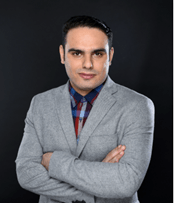
Mein Name ist Iman Dabbaghi. Ich arbeite als Senior Software Engineer in der Schweiz. Außerdem interessiere ich mich sehr für gewaltfreie Kommunikation, Bachata-Tanz und Musik sowie fürs die Persönlichkeitsentwicklung.
Ich habe einen Masterabschluss in Informatik von der Universität Freiburg in Deutschland, bin Spring/Java Certified Professional (OCP), Certified Professional for Software Architecture (CPSA-F) und ein lebenslanger Lernender 🎓.
EN:
My name is Iman Dabbaghi. I work as a Senior Software Engineer in Switzerland. I am also very interessted in nonviolent communication, Bachata dance and music and also for personal development.
I hold a masters degree in computer science from the university of Freiburg in Germany, am a Spring / Java Certified Professional (OCP), Certified Software Architecture (CPSA-F) and Life Long Learner🎓
Let’s connect
GFk Newsletter!
Jetzt die E-Mail Adresse eingeben und über die Termine benachrichtigt werden.

